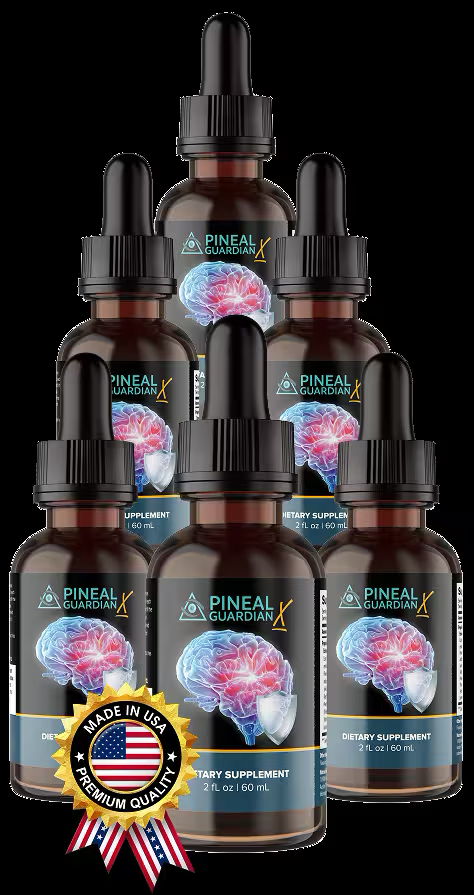
A daily liquid supplement built around a single idea: your pineal gland makes melatonin, and melatonin does far more than help you sleep. Pineal Guardian X claims to flush the fluoride that builds up in the pineal gland and restore your brain's natural melatonin production — supporting memory, focus, clarity and deep, restorative sleep.
Deep inside your brain sits a tiny, pine cone-shaped gland about the size of a grain of rice: the pineal gland. Its best-known job is producing melatonin, the hormone that regulates your sleep-wake cycle. Pineal Guardian X is built on the vendor's claim — attributed on the sales page to research at Harvard Medical School — that melatonin does far more than help you sleep: it is, in the vendor's words, "your brain's primary neuroprotector", clearing inflammation, creating new neural connections and shielding the brain from age-related damage and decline. Be straight about the status of that claim: it is the vendor's pitch, presented with a Harvard logo on the sales page, and this page could not independently verify a Harvard study behind it. The mechanism is plausible as a story — melatonin is indeed an antioxidant with neuroprotective properties in the research literature — but no published trial has tested the finished Pineal Guardian X formula itself, and the fluoride-pineal theory below is a hypothesis, not established science.
The problem the product claims to solve is fluoride. Fluoride is found in toothpaste, tap water and many processed foods, and the vendor's argument is that it builds up in the pineal gland over a lifetime, disrupts the gland's function and decreases the amount of melatonin your brain produces — leaving the brain exposed to brain fog, memory loss and a rapid decline in focus and clarity. Pineal Guardian X positions itself as "the only formula designed to flush out fluoride and restore natural melatonin level production", using nine botanical ingredients that the vendor says cleanse the pineal gland, remove heavy metals and toxins, and support the brain's own melatonin output. That is the whole pitch in one sentence: not a melatonin pill — the formula contains no melatonin as an ingredient — but a blend meant to help your own pineal gland make melatonin properly again.
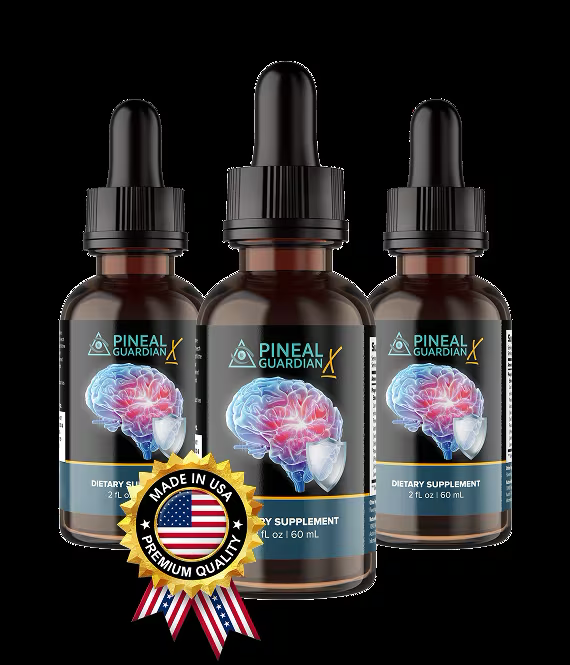
What the product actually is: a liquid dietary supplement in a 2 fl oz (60 mL) amber glass dropper bottle, with a black label showing a brain graphic and the words "Pineal Guardian X". Each bottle is a 30-day supply. That matters because several affiliate and review sites describe Pineal Guardian as capsules, with "one capsule per serving" — that is wrong. The official product is a liquid, and this page follows the official product, not the clones. One honest gap: the official sales page does not publish the per-serving amount in drops or millilitres, and there is no Supplement Facts panel shown anywhere on it. A customer review on the page mentions using "the suggested dosage two times daily", but the page itself never states the dose — so this page cannot tell you how many drops to take, and you should follow the label on the bottle you receive. The same gap applies to the ingredients: all nine are named, but no per-ingredient dose is published anywhere, so none is given on this page either. Nothing here is invented to fill that hole.
Who makes it is another gap worth stating plainly. No manufacturer or company name is published on the official sales page. The page is branded only "The Pineal Guardian X", contact is by email at support@thepinealguardian.com, and ClickBank is the retailer of record. That is not unusual for ClickBank brain-health offers — several products in this niche are sold the same way — but it is a real difference from products made by a named company with a checkable address, and it means the guarantee runs through the vendor's support email and ClickBank's platform rather than through a company you can look up. Orders ship within 5–7 business days in a discreet package, and the formula is plant-based, non-GMO, gluten-free, with no stimulants and described as non-habit-forming. Every order is covered by a 365-day money-back guarantee — a full year, which is the longest guarantee window of any brain supplement on this site.
Pineal Guardian X is not a stimulant and it does not work like caffeine. It works, in the vendor's account, in five overlapping ways — each one tied to specific ingredients in the formula. The fluoride-detox mechanism is the vendor's theory; the ingredient roles below are what each botanical is traditionally used for and what the vendor claims for it.
The central claim of the whole product is that fluoride accumulates in the pineal gland and suppresses melatonin production. The formula's first job, as the vendor presents it, is to clear that buildup: Yamabushitake (Lion's Mane) is said to purge fluoride from the pineal gland, moringa "floods the brain with antioxidants to cleanse the pineal gland", and chlorella is included to remove heavy metals and toxins from brain tissue. Treat this honestly: fluoride does accumulate in pineal tissue — that much is documented in the scientific literature — but the claim that a supplement blend can flush it out and measurably restore melatonin production has not been demonstrated in a published human trial of this formula, and no trial of Pineal Guardian X itself exists. The mechanism is the vendor's story, and it should be weighed as a story, not as proven physiology.
If the pineal gland is the body's melatonin factory, then a cleaner gland should, in the vendor's logic, make more melatonin — and melatonin is the hormone that sets your sleep-wake cycle and, as an antioxidant, helps protect brain cells. Spirulina is included because it is rich in tryptophan, the amino-acid building block the body uses to make melatonin (via serotonin), and moringa is said to restore melatonin production for deep, restorative sleep. This is an important distinction from melatonin pills: Pineal Guardian X contains no melatonin itself, so it cannot force drowsiness the way a melatonin supplement does. If it helps sleep at all, the vendor's argument is that it does so by supporting your own production — a slower, indirect route, and one that depends entirely on the unproven fluoride-clearance step above.
The brain uses roughly a fifth of the body's oxygen while making up about two percent of its weight, which makes it unusually exposed to oxidative stress — the slow, free-radical wear linked to ageing in brain tissue. Several ingredients in the formula are included as antioxidants: moringa, described by the vendor as bursting with "over 90 vitamins", spirulina and chlorella as nutrient-dense algae, and neem, the Ayurvedic herb said to reduce oxidative stress to protect neurons. French maritime pine bark extract is included as a concentrated antioxidant as well. None of this is a treatment for any disease, and antioxidant content alone does not prove a brain benefit — but as nutritional support, the antioxidant layer is the least controversial part of the formula's design, because these are genuinely antioxidant-rich plants.
A brain that is not properly supplied with blood cannot think clearly, whatever else is in the formula. Two ingredients are included specifically for circulation: ginkgo biloba, the classic circulation herb whose flavonoids are associated with blood flow through small vessels, and French maritime pine bark extract, which the vendor says increases blood flow to the brain "for faster detoxification" and enhances the effectiveness of the other pineal-cleansing compounds. Ginkgo is the best-studied ingredient in this formula — its evidence for memory support in healthy adults is modest and mixed, but it is a real, well-known botanical with a long research record. One caution belongs here: ginkgo can interact with blood-thinning medication, so anyone on a blood thinner should show the ingredient list to their doctor first.
The final layer is the one buyers actually feel: memory, focus, learning and recall. Bacopa monnieri, the Ayurvedic brain tonic, is said to increase neurotransmitter activity for sharp mental function and to enhance focus, learning ability and recall speed; Lion's Mane is included for memory and cognitive function; neem is said to enhance neuroplasticity and memory retention; and spirulina is said to stimulate neurogenesis — the growth of new brain cells. Bacopa has the strongest independent evidence of the group, with several small trials reporting modest improvements in memory and learning over 8–12 weeks at studied doses of roughly 225–300 mg a day. The honest limit is the dose gap: because Pineal Guardian X publishes no per-ingredient amounts, there is no way to check whether its Bacopa content is anywhere near a studied dose. The formula is designed as a daily routine over months, not a one-off boost — and that is exactly why it carries a 365-day guarantee rather than a 30-day one.
One simple daily liquid routine covering the main ways the brain ages — from fluoride buildup and fading melatonin to foggy focus and broken sleep.
The headline benefit, and the reason most buyers arrive: remembering names, where the keys are, what you walked into the room for. The vendor's argument is that memory fades when melatonin falls and inflammation rises, and that restoring the pineal gland's output supports recall. Bacopa and Lion's Mane are the two ingredients with the most independent memory research behind them — Bacopa in particular has small trials showing modest gains over 8–12 weeks — but the dose gap means this page cannot confirm the formula delivers studied amounts. Treat memory support as the design goal, not a guaranteed outcome.
Brain fog — the slow, woolly feeling that makes a paragraph take three reads — is the complaint the vendor's sales page leads with, and focus is the benefit the formula's circulation ingredients are aimed at. Ginkgo and pine bark extract are included to support blood flow to the brain, and Bacopa is said to sharpen mental function and recall speed. If your fog tracks poor sleep, the melatonin angle may matter more than the circulation angle; if it tracks age, the antioxidant layer may matter more. Either way, clarity from a botanical blend builds over weeks, not hours — this is not a stimulant, and it will not feel like one.
Sleep is the benefit the pineal story is really about: the gland makes melatonin, melatonin sets the sleep-wake cycle, and a gland choked with fluoride (in the vendor's account) makes less of it. Spirulina's tryptophan and moringa are included to support the body's own melatonin production, and Lion's Mane is said to support deep, rejuvenating sleep. Because the formula contains no melatonin itself, it will not knock you out — the claim is subtler, that your own sleep rhythm steadies over time. If your sleep problem is a shifted clock, a melatonin pill is the more direct tool; if it is light, broken sleep in your fifties and sixties, this is the angle the product is aimed at.
Age-related cognitive decline is the fear behind most brain-supplement purchases, and the vendor's language goes right up to the line here: melatonin "shields your brain from age-related damage and decline", tamarind "helps prevent Alzheimer's-related neurodegeneration". Say this plainly: Pineal Guardian X is not a treatment for Alzheimer's disease or dementia, and no supplement can claim to prevent them. What the formula can honestly offer is nutritional support — antioxidants, circulation support and the building blocks of melatonin — for a brain that is still healthy. If you or a family member has a diagnosed cognitive condition, that deserves a doctor, not a dropper bottle.
The most ambitious claim on the sales page is that melatonin "creates new neural connections" and spirulina "stimulates neurogenesis and enhances brain cell growth". Neurogenesis — the birth of new neurons, mostly in the hippocampus — is real, and it continues into adulthood, but it is driven mainly by exercise, sleep and learning, not by a supplement blend. Lion's Mane is the ingredient with the most interesting evidence here: its compounds (hericenones and erinacines) have been studied for supporting nerve growth factor in animal and early human work. Treat "creates new connections" as vendor language for a plausible direction of research, not as something a dropper can deliver on a schedule.
Chlorella is the formula's detox ingredient: the vendor says it removes heavy metals and toxins from brain tissue and drastically reduces neuroinflammation, while tamarind is said to reduce pro-inflammatory molecules in brain tissue. Chlorella does bind certain metals in the gut in animal studies, and it is a genuinely nutrient-dense algae — but "detoxing the brain" is a phrase that promises more than any supplement can demonstrate, and the body already has a liver, kidneys and a blood-brain barrier doing that job around the clock. The honest version: these are antioxidant, nutrient-rich ingredients that support the body's own clearance systems; they are not a flush, a cleanse or a chelation therapy.
Poor sleep and poor mood travel together, and the vendor's sales page lists mood among the things the formula supports — the bridge pages call out energy and mood alongside focus and sleep. The mechanism, such as it is, runs through melatonin and sleep: steadier sleep usually means steadier days. Bacopa has also been studied for mild anxiety and stress in small trials, though the evidence is thin. This is a support claim, not a treatment claim: Pineal Guardian X is not an antidepressant, not an anti-anxiety treatment, and anyone dealing with a mood disorder should get proper help rather than a supplement.
Not a benefit of the ingredients, but a real benefit of the format: a liquid dropper is easy for people who struggle with capsules — older buyers, the product's core audience, often do. No pills to swallow, no chalky tablets, no capsule count to track; a 2 fl oz bottle lasts 30 days, and the dropper format means the dose is measured out rather than counted. The trade-off is the one flagged above: the official page never states the per-serving amount, so the routine is only as clear as the label on the bottle you receive. Check the label when it arrives and follow it, rather than any number on a review site.
Every ingredient below is named on the official sales page. What the page does not give — anywhere — is the amount of any ingredient per serving, and there is no Supplement Facts panel. Amounts are therefore listed as "not published" throughout; none has been invented or borrowed from another product.
Yamabushitake is the Japanese name for Lion's Mane mushroom (Hericium erinaceus), a shaggy white fungus revered in East Asian medicine as a brain tonic. The vendor says it purges fluoride buildup from the pineal gland, enhances memory and cognitive function, and supports deep, rejuvenating sleep. The independent interest in Lion's Mane is real: its hericenones and erinacines have been studied for supporting nerve growth factor, and small human trials have reported modest cognitive gains in older adults. It is the most scientifically interesting ingredient in this formula — and the one whose dose matters most, since the human trials used roughly 1–3 grams of mushroom extract a day, an amount that may or may not fit inside a 2 mL daily liquid serving. The official page does not say.
Spirulina is a blue-green algae and one of the most nutrient-dense foods on the planet — protein, B vitamins, iron, and the blue pigment phycocyanin, a strong antioxidant. The vendor's claims for it are the most ambitious in the formula: rich in tryptophan to boost natural melatonin production, stimulating neurogenesis and enhancing brain cell growth, and protecting against neurodegenerative decline. The tryptophan link is genuine biochemistry — tryptophan is the precursor the body uses to build serotonin and then melatonin — but the amount of tryptophan in a small liquid serving is necessarily small, and spirulina's neurogenesis claim rests on animal studies, not human trials of this product. As a food, spirulina is safe and nutritious; as a brain drug, the evidence is early.
Moringa oleifera, the "miracle tree" of South Asia, is included as the formula's nutrient anchor — the vendor describes it as bursting with "over 90 vitamins" (more precisely, over 90 nutrients including vitamins, minerals and amino acids). Its claimed roles are to flood the brain with antioxidants to cleanse the pineal gland, restore melatonin production for deep, restorative sleep, and sharpen memory recall and cognitive clarity. Moringa leaf is genuinely rich in vitamin A, vitamin C, calcium, potassium and iron, and its antioxidant content is well documented. The "90 vitamins" phrasing is vendor marketing — there are only 13 vitamins — but the underlying point stands: moringa is a concentrated source of the nutrients a brain uses daily.
Tamarind is a tart rainforest fruit used across South Asian and African cooking and medicine, included here as a neuroprotective ingredient. The vendor says it reduces pro-inflammatory molecules in brain tissue, is "proven to alleviate cognitive decline and memory loss", and "helps prevent Alzheimer's-related neurodegeneration". That last claim is the one this page will not repeat as fact: no food extract prevents Alzheimer's disease, and the vendor's "proven" wording goes far beyond what the evidence supports — the tamarind-brain research is mostly animal and cell studies. What tamarind does offer is a solid antioxidant and polyphenol profile and a long history of safe culinary use. Read its role as anti-inflammatory support, not as disease prevention.
French maritime pine bark extract (the best-known branded form is Pycnogenol) is a concentrated source of proanthocyanidins — the same antioxidant family found in grape seeds — and one of the better-studied botanicals in this formula. The vendor says it increases blood flow to the brain for faster detoxification, boosts memory, attention and focus, and enhances the effectiveness of all the other pineal-cleansing compounds. The circulation claim has the most support: pine bark extract has human trials behind it for blood flow and for attention and memory in older adults, typically at 50–150 mg a day. Whether this liquid delivers a comparable amount is unknowable from the published information, because the dose is not disclosed.
Chlorella is a single-celled green algae and the formula's second detox ingredient, after spirulina. The vendor says it removes heavy metals and toxins from brain tissue, drastically reduces neuroinflammation, and supports long-term brain health and mental clarity. Chlorella's cell wall does bind certain metals in the gut, and animal studies show it can reduce the absorption of some heavy metals — which is the origin of its detox reputation. The leap from gut binding in animals to "removing heavy metals from brain tissue" in humans is a large one, and this page will not make it. What chlorella reliably contributes is chlorophyll, iron, B12 analogues and a broad nutrient profile, plus the antioxidant support that the whole formula leans on.
Neem (Azadirachta indica) is a revered Ayurvedic tree, and "Elder Mahogany Neem" is the vendor's name for its neem ingredient. The vendor says it reduces oxidative stress to protect neurons, enhances neuroplasticity and memory retention, and shields the brain from age-related cognitive decline. Neem leaf and bark extracts do show antioxidant and anti-inflammatory activity in laboratory and animal studies, and neem has centuries of traditional use — but human brain research on neem is thin, and this is the least-studied ingredient in the formula. One practical caution: neem has traditional uses that include blood-sugar effects, so anyone on diabetes medication should mention it to their doctor, and it is not recommended during pregnancy.
Ginkgo biloba, from one of the oldest tree species on Earth, is herbal medicine's classic circulation and memory herb, and the most familiar name on this label. The vendor says it improves cerebral circulation for peak mental clarity, strengthens memory and recall ability, and protects neurons from degenerative damage. Ginkgo's evidence is the most extensive here — decades of trials, with a large 2008 prevention trial finding no reduction in dementia risk, but smaller trials reporting modest gains in memory and attention, typically at 120–240 mg a day. The dose question applies again: without a published amount, there is no way to compare this formula with the studied doses. The interaction warning is the important part: ginkgo can increase bleeding risk, so anyone on warfarin, aspirin, clopidogrel or another blood thinner must check with a clinician first.
Bacopa monnieri is the Ayurvedic brain tonic with the strongest modern evidence in this formula. The vendor says it increases neurotransmitter activity for sharp mental function, enhances focus, learning ability and recall speed, and supports long-term cognitive resilience. The independent record backs the direction: several randomised trials report modest improvements in memory, learning and processing speed after 8–12 weeks, at studied doses of roughly 225–300 mg of standardised extract a day. Bacopa's effects build slowly — it is not a same-day focus aid — and it can cause stomach upset in some people. As with every ingredient here, the published dose is missing, so this page can report what Bacopa does at studied doses but cannot confirm this product delivers them.
Other ingredients: not published — the official sales page shows no Supplement Facts panel, no "other ingredients" list and no per-serving amounts. The product is a liquid in a 2 fl oz (60 mL) dropper bottle, described by the vendor as plant-based, non-GMO and gluten-free, with no stimulants. If you are pregnant, nursing, or taking medication — especially blood thinners, blood-pressure or blood-sugar medication — consult your physician before use.
Pineal Guardian X was designed for older adults who can feel their memory and sleep changing — and who would rather support their brain nutritionally than accept the decline as inevitable. You may recognise yourself in one of these groups:
Forgetting names mid-sentence, losing the thread of a conversation, walking into a room and forgetting why. If that pattern is new and creeping, the formula's memory ingredients — Bacopa, Lion's Mane and ginkgo — are aimed directly at it. But be honest with yourself: sudden or rapidly worsening memory loss deserves a doctor's appointment first, because no supplement can diagnose what is causing it.
If you fall asleep but wake at 2 or 3 am and cannot get back, or your sleep feels shallow rather than deep, the melatonin angle is the one aimed at you. This is not a sleeping pill — it contains no melatonin — so judge it on whether your sleep steadies over weeks, not on the first night. If you already take melatonin, talk to your doctor before adding a product that claims to raise your own production.
A large share of the product's audience is older, and older buyers often struggle with capsules. A liquid dropper removes that friction entirely — measured out, no pills, no chalky aftertaste. If you already take several capsules a day and dread adding more, the format alone may be the deciding factor. Just remember the dose is not published on the sales page, so read the bottle label when it arrives.
If you already filter your water, avoid fluoride toothpaste or worry about what decades of exposure have done, this product is built precisely for that concern — it is the only brain supplement on this site whose entire pitch is fluoride and the pineal gland. That focus is also its risk: the fluoride-detox mechanism is a hypothesis, not a proven therapy, so buy it for the ingredients and the guarantee, not for a promise that science has not yet confirmed.
An honest boundary: Pineal Guardian X is a nutritional supplement, not a treatment. It does not diagnose, treat or prevent Alzheimer's disease, dementia or any cognitive disorder, whatever the vendor's sales language suggests. If you have been diagnosed with a cognitive condition, take prescription medication — especially blood thinners, blood-pressure or blood-sugar drugs — or are pregnant or nursing, speak with your doctor before using it. And never let a supplement replace a medical workup for memory loss: the causes that matter most are the ones a doctor can find and fix.
Brain nutrition works on the body's timetable, not a stopwatch. Individual experiences vary — this is a realistic map of the first year, the full length of the guarantee.
The first fortnight is about building the habit: the liquid, every day, at the same time. Do not expect dramatic changes yet — the ingredients work gradually, and Bacopa in particular needs weeks, not days. What you may notice first is sleep: if the melatonin angle is doing anything, lighter sleepers sometimes report steadier nights early on. Keep a simple note — time to fall asleep, number of wake-ups, how rested you feel at 7 am — because memory is a poor witness to gradual change.
By the end of the first bottle, the formula has had a month of steady supply. This is groundwork, not the finish line: antioxidant status and nutrient stores build gradually, and the pineal story — if it works at all — works on the same slow clock. Some users say long days feel a little less foggy by now; others notice nothing yet. Both are normal, and neither proves anything on its own. Consistency is what matters, which is why the 3-bottle package exists.
The second month is typically the window where people begin forming first impressions — how quickly names come back, whether focus holds through an afternoon, whether sleep feels deeper. Bacopa's trials started showing effects around 8–12 weeks, which puts this window right at the edge of the evidence. Compare like with like: the same kind of day, the same sleep conditions. If nothing has changed at all by now, note it honestly — the guarantee exists for exactly that outcome.
Ninety days is the fair test most brain-nutrition routines ask for — and the reason the 3-bottle package is the middle option. By now you have given the formula a genuine trial: memory, focus, sleep and daytime energy, judged against where you started, not against a single good or bad week. If your brain feels meaningfully better supported, you have your answer; if not, you still have nine months of guarantee left, so there is no pressure to decide today.
With the routine established, the focus shifts to maintenance — the daily support of tissues that cannot simply be replaced once lost. Pair the liquid with the habits that multiply its value: regular exercise (the strongest known driver of neurogenesis), seven to eight hours of sleep, learning something new, and a diet rich in leafy greens, berries and oily fish. A supplement is support for those habits, not a replacement for them, and the habits will do more for your brain than any bottle.
Twelve months is the complete trial the guarantee allows — the longest window any product on this site offers. By now you have given the formula a genuinely fair chance, long enough for slow brain tissue to respond and long enough to separate a real improvement from a good month. If you are not satisfied with the support you feel, contact support, return the bottles (even empty) and claim your refund within the 365 days. If it has become a quiet part of your mornings and your memory and sleep are better for it, the 6-bottle package is priced for exactly this commitment.
Most people weighing up Pineal Guardian X are really choosing between four paths. Here is an honest look at what each one does — and doesn't — do.
A daily liquid approach built on the pineal gland and melatonin story. Nine botanicals — Lion's Mane, Bacopa, ginkgo, spirulina, moringa, tamarind, pine bark, chlorella and neem — aimed at fluoride clearance, antioxidant defence, circulation and memory. It is not a melatonin pill, not a stimulant and not a treatment for any disease. From $39 a bottle on the 6-bottle package, covered by a 365-day money-back guarantee — the longest on this site. The honest limits: no per-ingredient doses published, no manufacturer named, and the fluoride-detox mechanism is unproven.
The standard alternative: a daily capsule with Bacopa, ginkgo, phosphatidylserine or Lion's Mane, often with published doses you can actually check against the research. A good capsule formula is more transparent than Pineal Guardian X on dosing, and usually cheaper per month. What it lacks is the liquid format — a real advantage if you struggle with pills — and the pineal/fluoride angle, which no capsule brand has built its whole pitch around. If dose transparency matters most to you, a capsule with a full Supplement Facts panel is the better buy.
The direct, cheap alternative for the sleep half of this product's pitch: a melatonin tablet costs a few dollars a month and works the same night, because it supplies the hormone directly instead of asking your pineal gland to make more of it. But melatonin is a hormone, and many users report morning fog, vivid dreams or a hungover feeling the next day — and it does nothing for memory, focus or fluoride. If sleep is your only problem, melatonin is the simpler tool; if you want memory support as well, Pineal Guardian X is aimed at both.
The simplest option, and for a while it feels free. But the forces acting on an ageing brain — oxidative stress, poor sleep, nutrient gaps, a sedentary routine — do not pause, and the habits that protect the brain are free: daily walking, seven to eight hours of sleep, learning new skills, and a diet rich in greens and berries. A supplement like Pineal Guardian X is best understood as support for those habits, not a replacement for them. If you buy nothing, buy the habits first — they have the strongest evidence of anything on this page.
Order through the official checkout to qualify for the guarantee and bonuses. Every package is covered for 365 days. Prices below are the live official prices checked on 13 November 2026 — confirm the final totals at checkout before ordering. Note: several affiliate and review sites list different prices ($59/$49/$39) and call this a capsule product — those are wrong. The official prices are $69/$59/$39 and the product is a liquid.
⚠ High demand — this discounted pricing is not guaranteed to last.
Heads-up on checkout details. ClickBank's listing for this product notes that upsells are available, so expect additional offers on the way through checkout — they are skippable, but look for them. The vendor's own pages also carry an FAQ tab about automatic charging, so if you want a one-time purchase, check the billing type on the payment screen before paying and screenshot your checkout totals. International orders outside the US incur extra shipping fees. The 1-bottle tier image above is the vendor's single-bottle hero photo; the vendor's own 1-bottle pricing creative carries a "Made in USA" rosette across the label, so this page uses the cleaner hero shot for that tier instead.
Four digital bonuses are included free with the 3-bottle and 6-bottle packages — combined stated value $169.88. They are digital guides and audio tracks, not physical products.
The vendor's own getting-started guide for the formula — how to use the liquid and what to expect in the first weeks. Regular $39.97 — FREE today
A sleep guide paired with the formula's melatonin angle — habits and routines for deeper, more restorative sleep. Regular $39.97 — FREE today
A hearing-health guide bundled with the brain-health offer. Regular $39.97 — FREE today
Audio tracks to listen to alongside the daily routine, aimed at relaxation and focus. Regular $49.97 — FREE today
Try Pineal Guardian X for a full 365 days. If you are not totally and completely satisfied with the product, your results or your experience in the first 365 days from your purchase, simply let the vendor know by calling the toll-free number or dropping an email to support@thepinealguardian.com, and you will receive a full refund within 48 hours of the product being returned — even if the bottles are empty. No questions asked, less shipping and handling.
Here is exactly how it works. Your 365 days start on the day you place your order. Use the supply daily and give the formula a fair trial — the vendor's own guidance and the ingredient evidence both suggest judging it over months, not days. If at any point in those twelve months you decide Pineal Guardian X is not for you, contact support, send back the bottles (empty is fine), and your purchase price will be refunded to your original payment method. Because sales run through ClickBank, the guarantee is also enforceable at the platform level — you can request refunds through ClickBank support with your order confirmation details. The guarantee covers orders placed through the official website, which is one more reason to buy there rather than from third-party marketplace sellers. One practical note: the refund is "less shipping and handling", so the $9.99 shipping on smaller orders is not refunded.
TRY Pineal Guardian X RISK-FREE FOR 365 DAYS →A liquid. The official product is a 2 fl oz (60 mL) amber glass dropper bottle, and each bottle is a 30-day supply. Several affiliate and review sites describe it as capsules with "one capsule per serving" — that is wrong, and this page follows the official product. If a listing shows capsules, it is describing the product incorrectly.
The official sales page does not publish the per-serving amount in drops or millilitres, and there is no Supplement Facts panel to check. A customer review on the page mentions using "the suggested dosage two times daily", but the page itself never states the dose. Follow the directions on the bottle label when your order arrives — do not take a number from a review site, including this one.
No. Melatonin is not listed among the nine ingredients. The product's claim is different: it aims to help your own pineal gland produce melatonin naturally, by clearing the fluoride that the vendor says suppresses production. That is a slower, indirect route than taking a melatonin pill, and it depends on the unproven fluoride-clearance mechanism.
The nine ingredients are Yamabushitake (Lion's Mane), premium spirulina, moringa extract, heritage tamarind extract, French maritime pine bark extract, pure chlorella, elder mahogany neem, ginkgo biloba and Bacopa monnieri. The doses are not published anywhere on the official sales page — no milligrams, no Supplement Facts panel — so this page lists them as "not published" and invents none. That is the single biggest transparency gap in this product.
Not as a therapy. It is documented that fluoride accumulates in pineal tissue, and melatonin is a genuine antioxidant with neuroprotective properties in the research literature. But no published human trial has shown that this formula — or any supplement blend — flushes fluoride from the pineal gland and measurably restores melatonin production. Treat the fluoride story as the vendor's hypothesis, and judge the product on its ingredients and its 365-day guarantee instead.
The sales page attributes the melatonin-as-neuroprotector idea to "scientists at Harvard Medical School" and displays a Harvard University logo. This page could not independently verify a Harvard study behind the claim, and the logo's presence on a sales page is not evidence of an institutional endorsement. Melatonin's antioxidant and neuroprotective properties are real research topics, but the Harvard attribution should be treated as vendor marketing until a specific study is named.
No manufacturer or company name is published on the official sales page. The page is branded only "The Pineal Guardian X", contact is by email at support@thepinealguardian.com (affiliate support: affiliates@thepinealguardian.com), and ClickBank is the retailer of record. That is common for ClickBank brain-health offers, but it means the guarantee runs through the vendor's support email and ClickBank's platform rather than through a named company you can look up.
365 days from your original purchase date — a full year, the longest guarantee of any brain supplement on this site. If you are not satisfied, contact the vendor by calling the toll-free number or emailing support@thepinealguardian.com, return the bottles (even empty) within 365 days, and you receive a full refund within 48 hours of the product being returned, less shipping and handling. Because sales run through ClickBank, you can also request a refund through ClickBank support with your order confirmation.
With the 3-bottle and 6-bottle packages you get four digital bonuses, combined stated value $169.88: the Pineal Guardian X Quick Start Guide ($39.97), The Sleep Miracle ($39.97), The Ultimate Ear Health Toolkit ($39.97) and Brain Health Therapy Audio Tracks ($49.97). They are digital guides and audio tracks, not physical products, and they are not included with the single-bottle order.
Official prices: 1 bottle $69 plus $9.99 shipping (total $78.99); 3 bottles $59 each ($177) plus $9.99 shipping (total $186.99) with 4 bonuses; 6 bottles $39 each ($234) with free US shipping and 4 bonuses. Regular prices are listed as $99/$297/$594. ClickBank's listing notes that upsells are available, so expect extra offers at checkout, and the vendor's pages carry an FAQ tab about automatic charging — so check the billing type on the payment screen before paying and screenshot your totals. Do not rely on the $59/$49/$39 prices shown on clone sites; the official prices are $69/$59/$39.
The formula is plant-based, non-GMO, gluten-free, with no stimulants and described as non-habit-forming, made in the USA in an FDA-registered, GMP-certified facility. The main cautions come from ginkgo, which can increase bleeding risk and interact with blood-thinning medication, and from neem, which has traditional blood-sugar effects. If you take blood thinners, blood-pressure or blood-sugar medication, or are pregnant or nursing, consult your physician first. The safety of the whole formula has not been established in a clinical trial.
Only through the official website at thepinealguardian.com. It is not sold in stores, and it is not available on Amazon or Walmart. Checkout is handled securely by ClickBank, which also enforces the 365-day guarantee. Bottles appearing on marketplaces are offered by third-party sellers and are not covered by the guarantee — and several lookalike sites (including one spelled "thepenialguardian.com") are not the official site, so check the domain before you buy.
Every order is covered by a 365-day money-back guarantee. Contact support within 365 days of purchase, return the bottles (even empty), and your purchase price is refunded within 48 hours of the return — less shipping and handling. You can also claim through ClickBank support with your order confirmation details.
You will be taken to the official order page to choose your package, then to ClickBank's secure checkout. Expect upsell offers on the way through checkout — they are skippable. Check the billing type on the payment screen before paying, and screenshot your checkout totals. Orders ship within 5–7 business days in a discreet package; international orders incur extra shipping fees.
Show the ingredient list to your doctor or pharmacist first. The ingredients to flag are ginkgo biloba (blood-thinning interaction — warfarin, aspirin, clopidogrel), neem (blood-sugar effects), and Bacopa (can cause stomach upset and may interact with some medications). The formula already works on sleep and circulation pathways, so check for overlap with any sleep aid or blood-pressure medication you take.
No — and any supplement that claimed otherwise would not be worth trusting. Pineal Guardian X is a nutritional supplement, not a drug, and the vendor's language about preventing Alzheimer's-related neurodegeneration goes beyond what the evidence supports. It supports brain health nutritionally; it does not diagnose, treat or prevent any disease. If you or a family member has a diagnosed cognitive condition, that deserves a doctor, not a dropper bottle.
Because most of them are affiliate clone sites, not the official page. The clones reviewed for this page show $59/$49/$39 pricing, 60-day or 90-day guarantees, two bonuses instead of four, and describe the product as capsules — all of which conflict with the official page ($69/$59/$39, 365-day guarantee, four bonuses, liquid dropper). This page uses the official figures throughout. Review counts conflict the same way (the official page cites 11,231 customers and 3,211 reviews; clones cite 5.0/1,573 and 5.0/8,743), so no review count is repeated here as a verified fact.
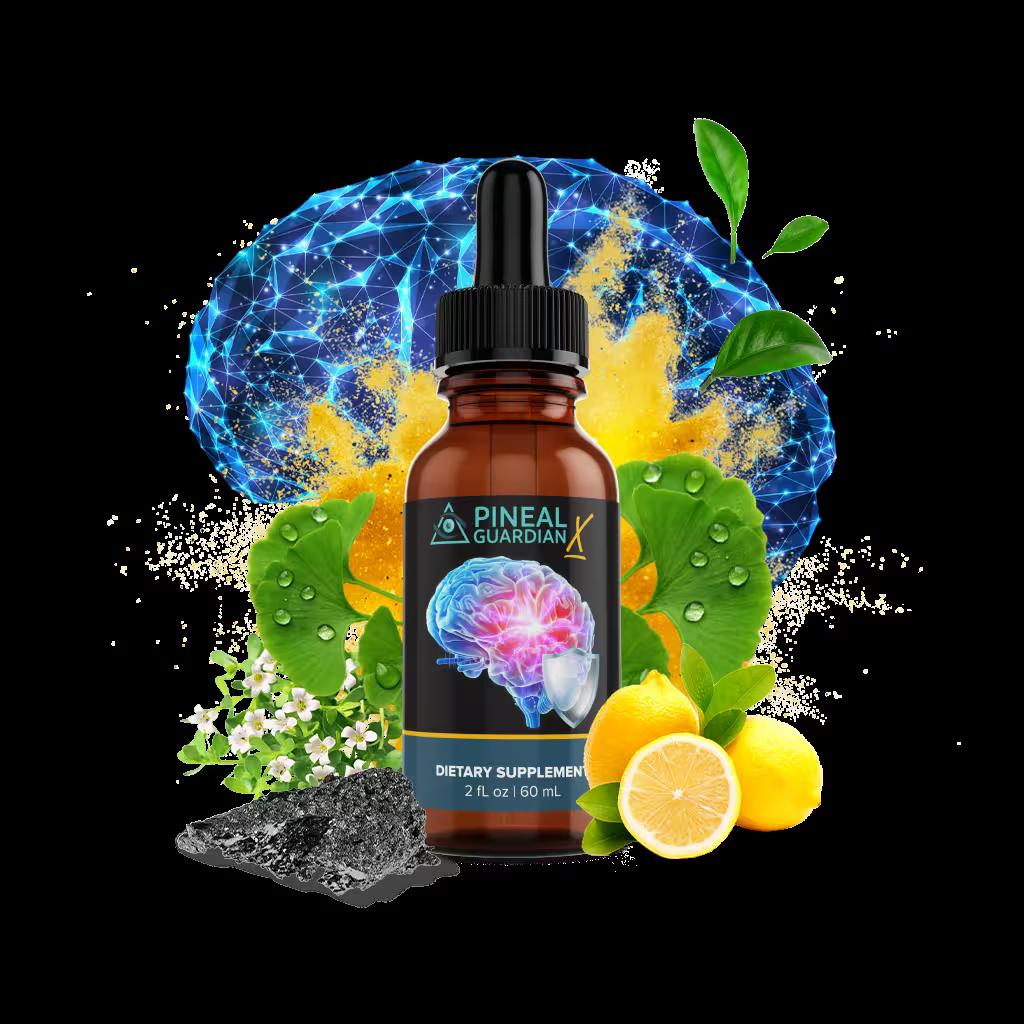
Support your memory, focus and sleep with 9 plant-based ingredients for as little as $39 a bottle, backed by a 365-day money-back guarantee.
GET YOUR 61% DISCOUNT NOW →